AI-Scout Captures a Drone in Flight for the First Time
On this page
In August 2026, AI-Scout captured a target drone in flight for the first time. AI-Scout is the autonomous counter-drone interceptor designed and built by Skyscouter Technologies Ltd in Port Coquitlam, British Columbia.
The capture followed an intensive flight-test campaign over the summer of 2026, when the AI-Scout airframe, sensors and onboard AI came together. The next month, AI-Scout was demonstrated to Canadian and allied defence evaluators at the Department of National Defence IDEaS Counter-UAS Sandbox in Suffield, Alberta.
“AI-Scout was built for the places where shooting, jamming or crashing into a drone is not an option, and this first capture shows that approach working in the air.”
Sam Sarabi, CEO and Founder, Skyscouter
Why capture a drone instead of destroying it?
Small drones now threaten military sites, airports, stadiums and critical infrastructure. Most defences do one of two things. They jam radio signals, which an autonomous drone can ignore, or they destroy the target, which sends debris onto whatever is below.
AI-Scout takes a different approach, with no bullets, fragments or jamming. The captured drone descends under a parachute into a small, predictable area and is recovered intact, so investigators can find out who flew it and what it carried.
How does AI-Scout capture a drone?
- Detect. A radar or other sensor spots the drone and passes its position to AI-Scout.
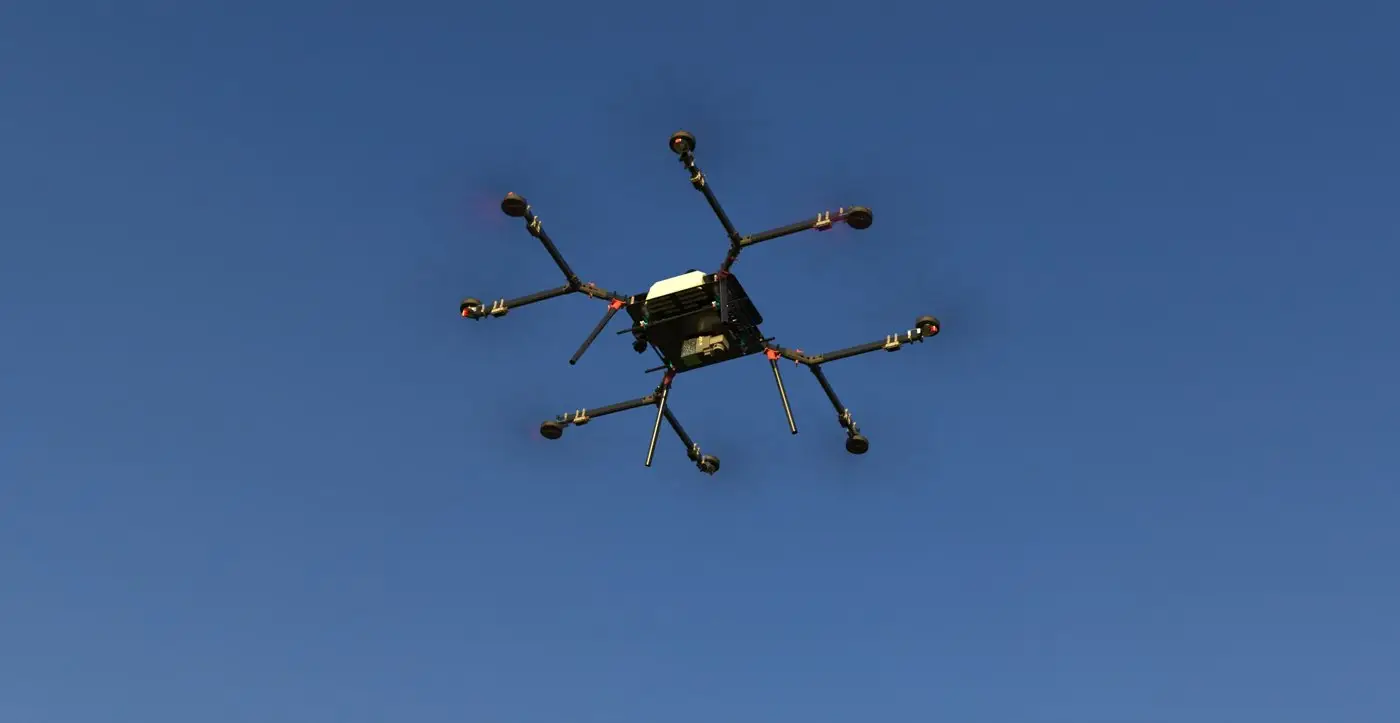
- Launch. AI-Scout lifts off from a vehicle or a team on foot and flies toward the target at up to 100 km/h.
- Lock on. Onboard cameras and AI find the target, confirm it is a drone and not a bird or aircraft, and track it.
- Capture. With the operator’s approval, AI-Scout fires a net and captures the drone at close range.
- Recover. The target comes down under a parachute and is recovered whole. AI-Scout can take on a second drone in the same flight.
Who stays in control?
A person does. AI on the aircraft finds and tracks the target, but an operator approves every capture from a touchscreen ground station.
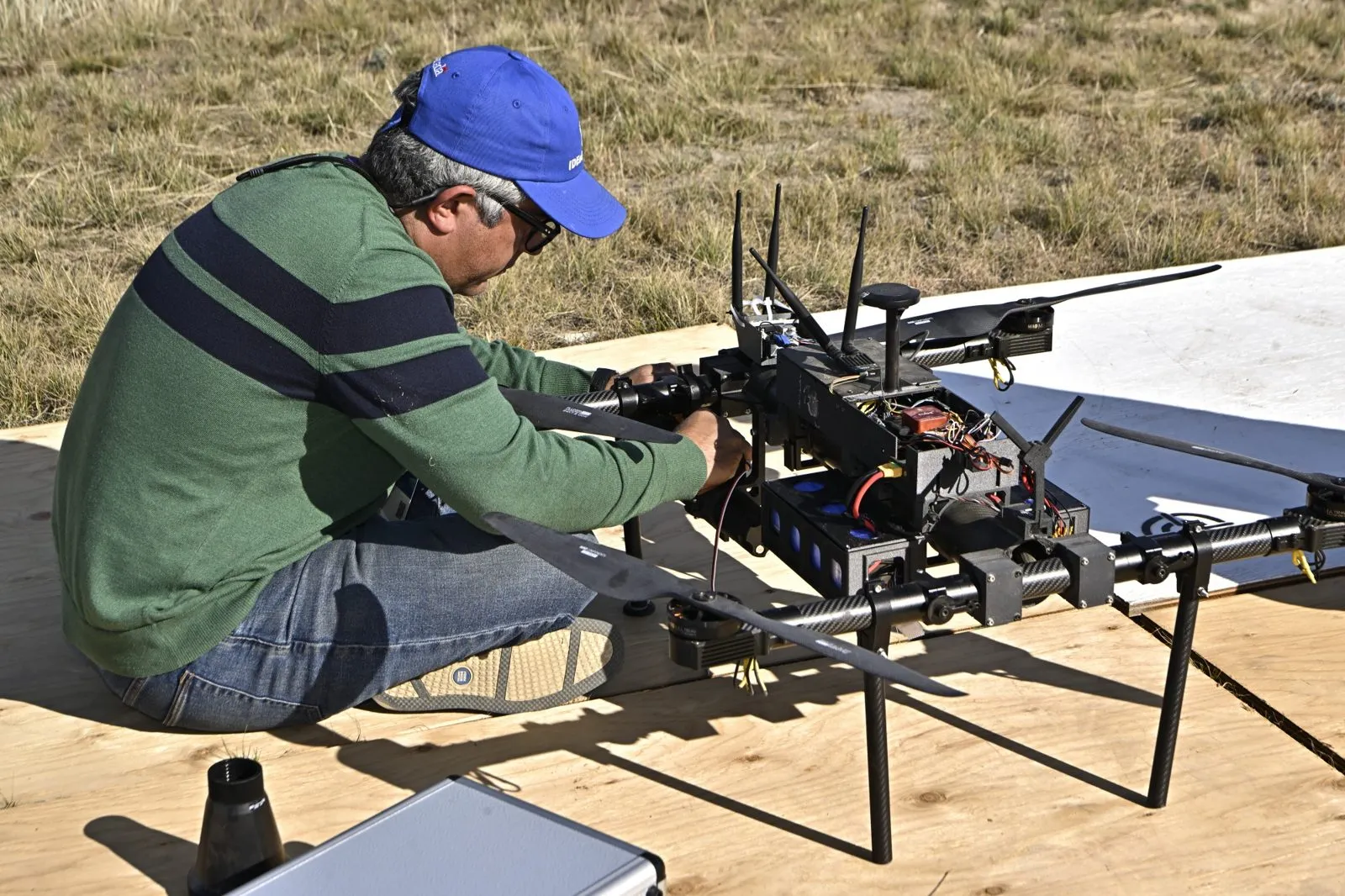
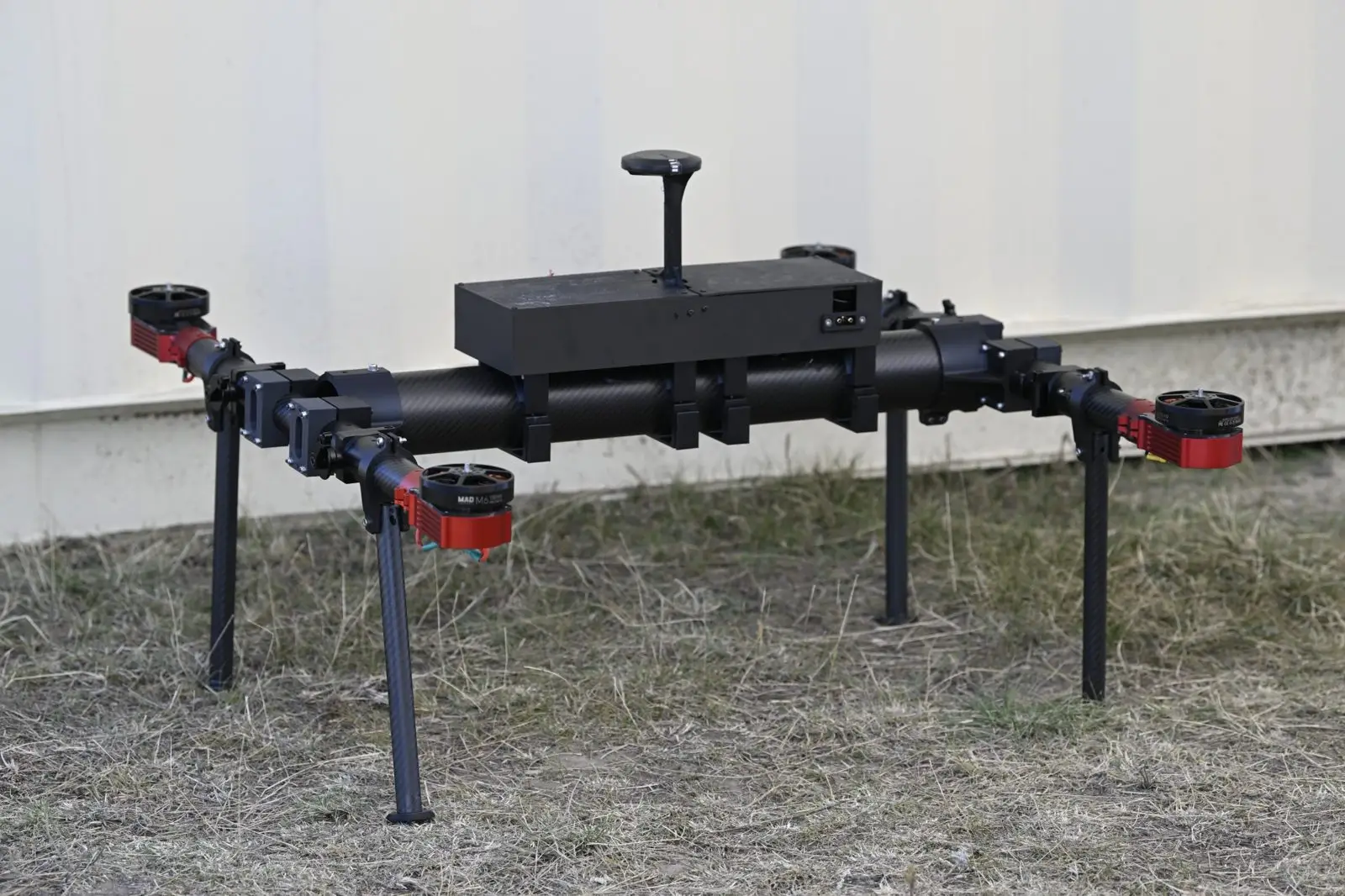
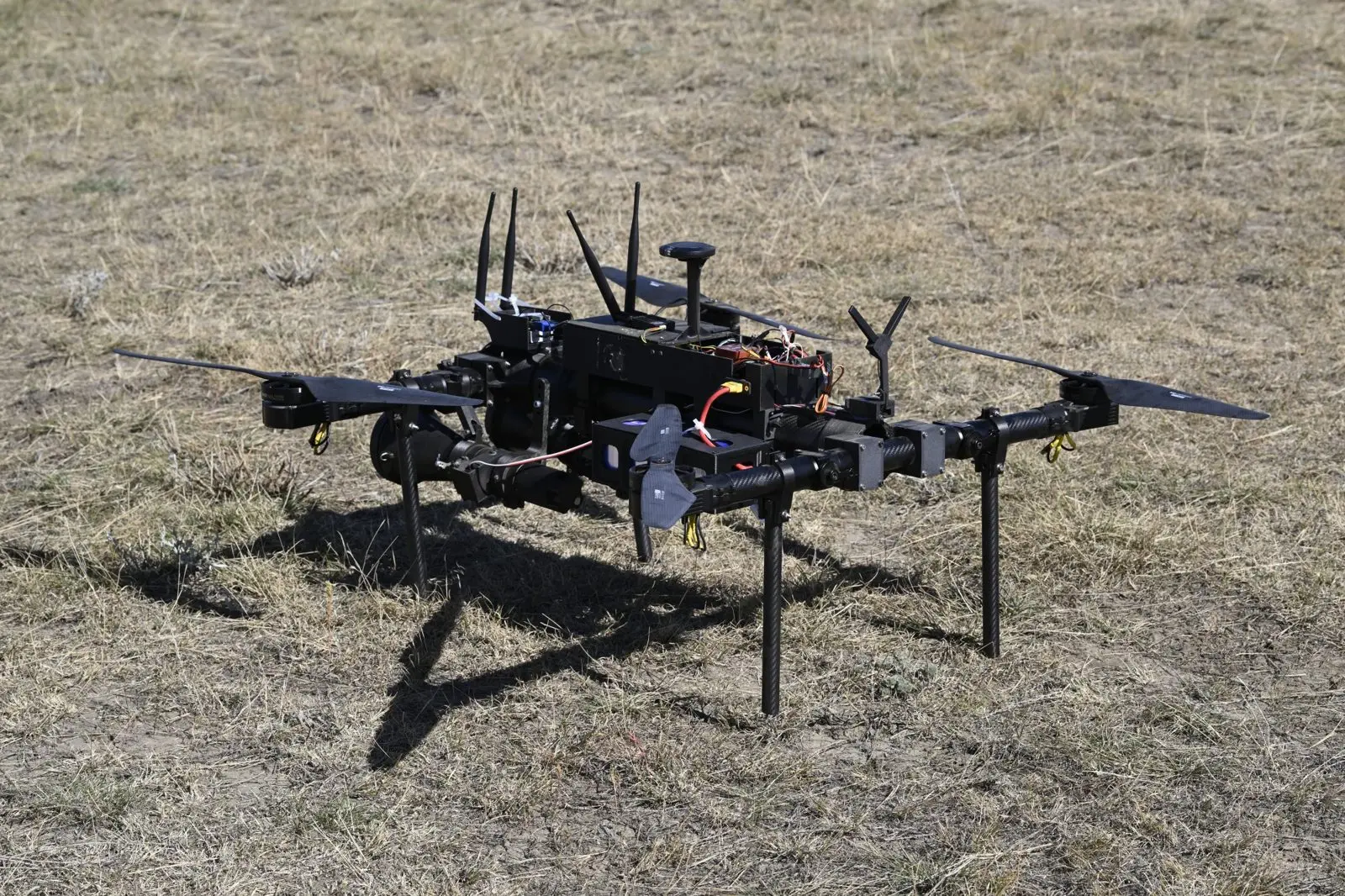
Preparing AI-Scout for a demonstration flight at DRDC Suffield. Photos: Department of National Defence, IDEaS Counter-UAS 2026 Sandbox.
AI-Scout at a glance
- Type: Electric quadcopter, H-frame
- Defeat method: Physical capture, parachute recovery
- Captures per flight: Up to 2
- Top speed: 100 km/h
- Day and night: Yes, with colour and thermal cameras
- Transport: Folding arms, carried by vehicle or backpack
- Sensors: Connects to the radar and detection systems a site already has
- Made in: Port Coquitlam, British Columbia, Canada
What comes next?
Skyscouter’s next steps are production units for defence and security customers, and FirstScout, a version for fire and police services.
Read more about how AI-Scout works, or request a technical briefing.
About Skyscouter
Skyscouter Technologies Ltd was founded in British Columbia in 2017 to build drones for demanding industrial work. Its aircraft have flown commercial missions in forestry, oil and gas inspection and pipeline monitoring. Its two platforms are Scouter, a long-range hybrid UAV, and AI-Scout, and both are designed and built in British Columbia.