Overview
Autonomy that brings a drone down whole.
Unauthorized drones are a growing problem over oil refineries, airports, stadiums and critical infrastructure. Jamming radio signals does not stop a drone that flies autonomously, and destroying it sends debris onto whatever is below.
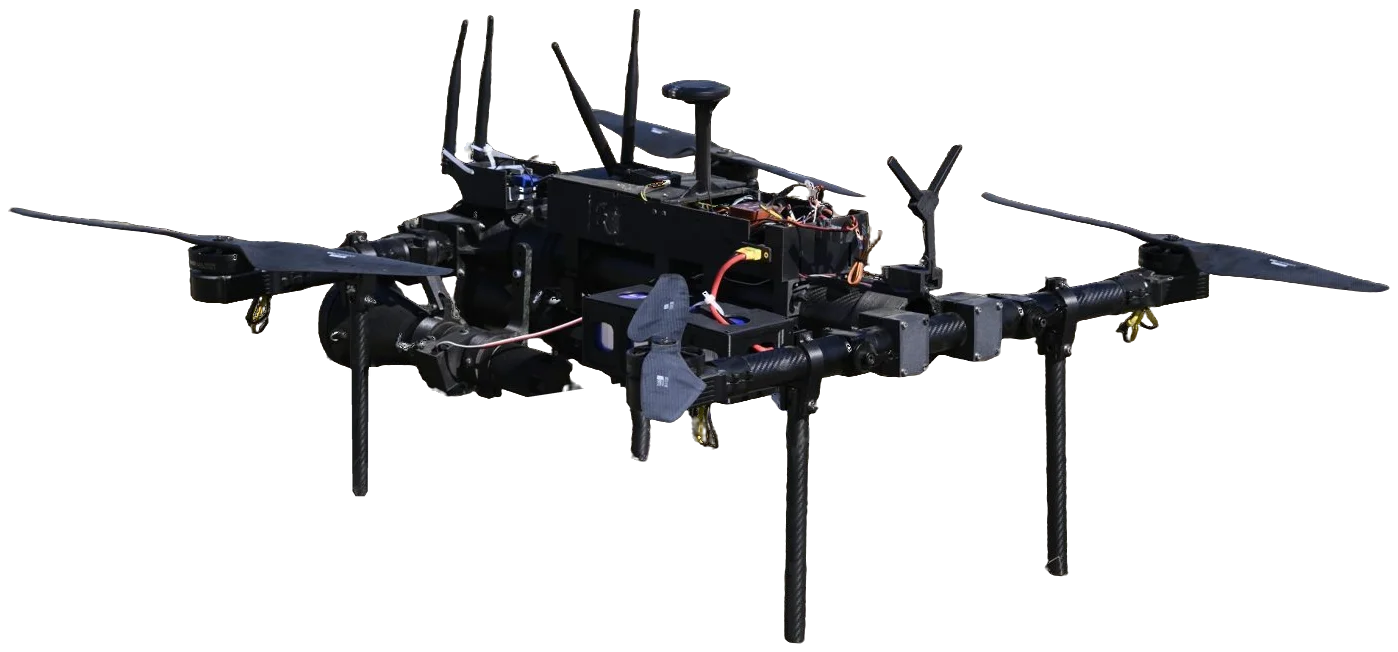
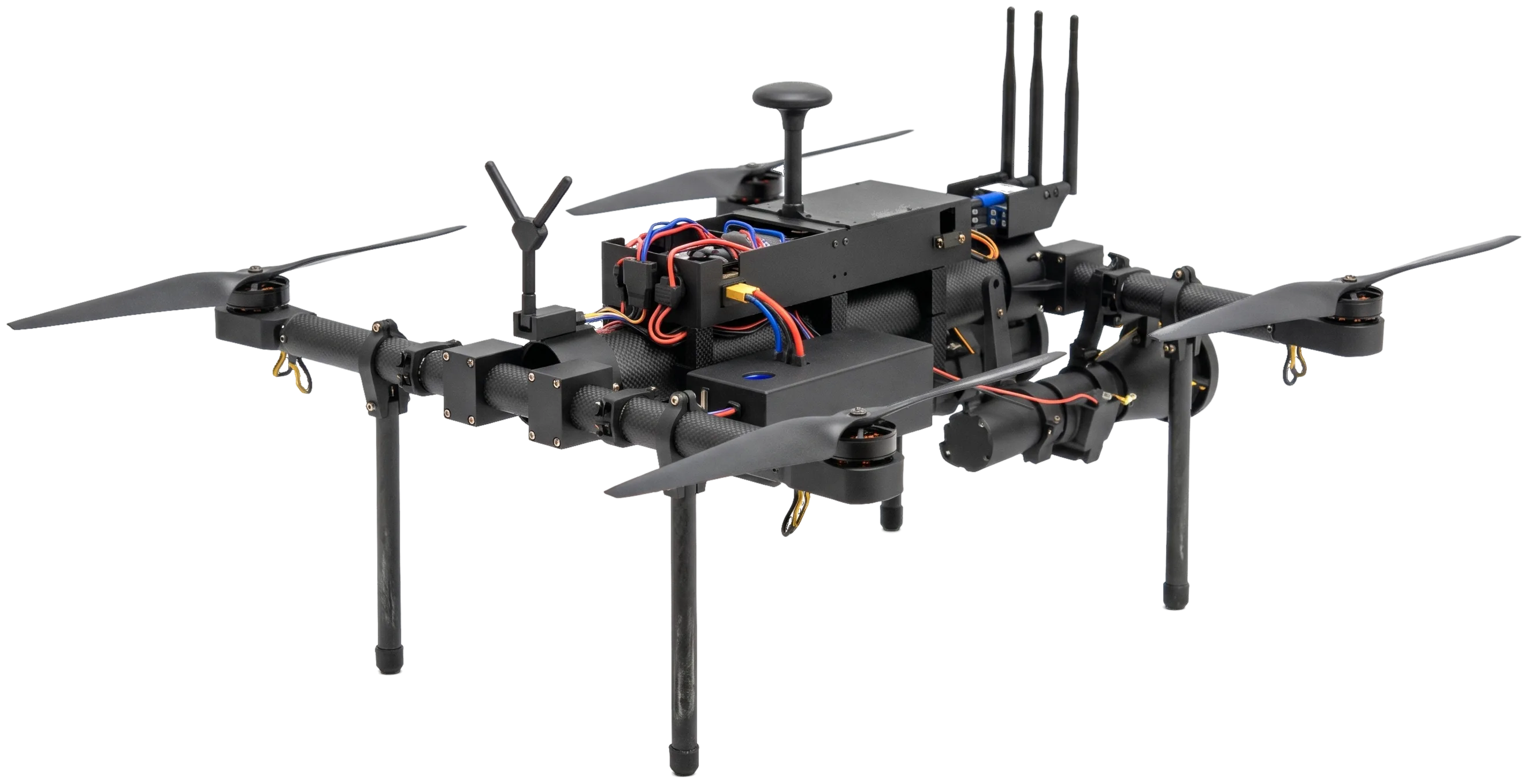
AI-Scout takes a robotics approach. It navigates, classifies and tracks the target on its own and chooses how to approach, then, with the operator’s approval, captures it physically in the air. The captured drone descends under a parachute into a small, predictable area and is recovered intact, and AI-Scout returns to fly again.
How it works
From alert to capture
- 01
Detect
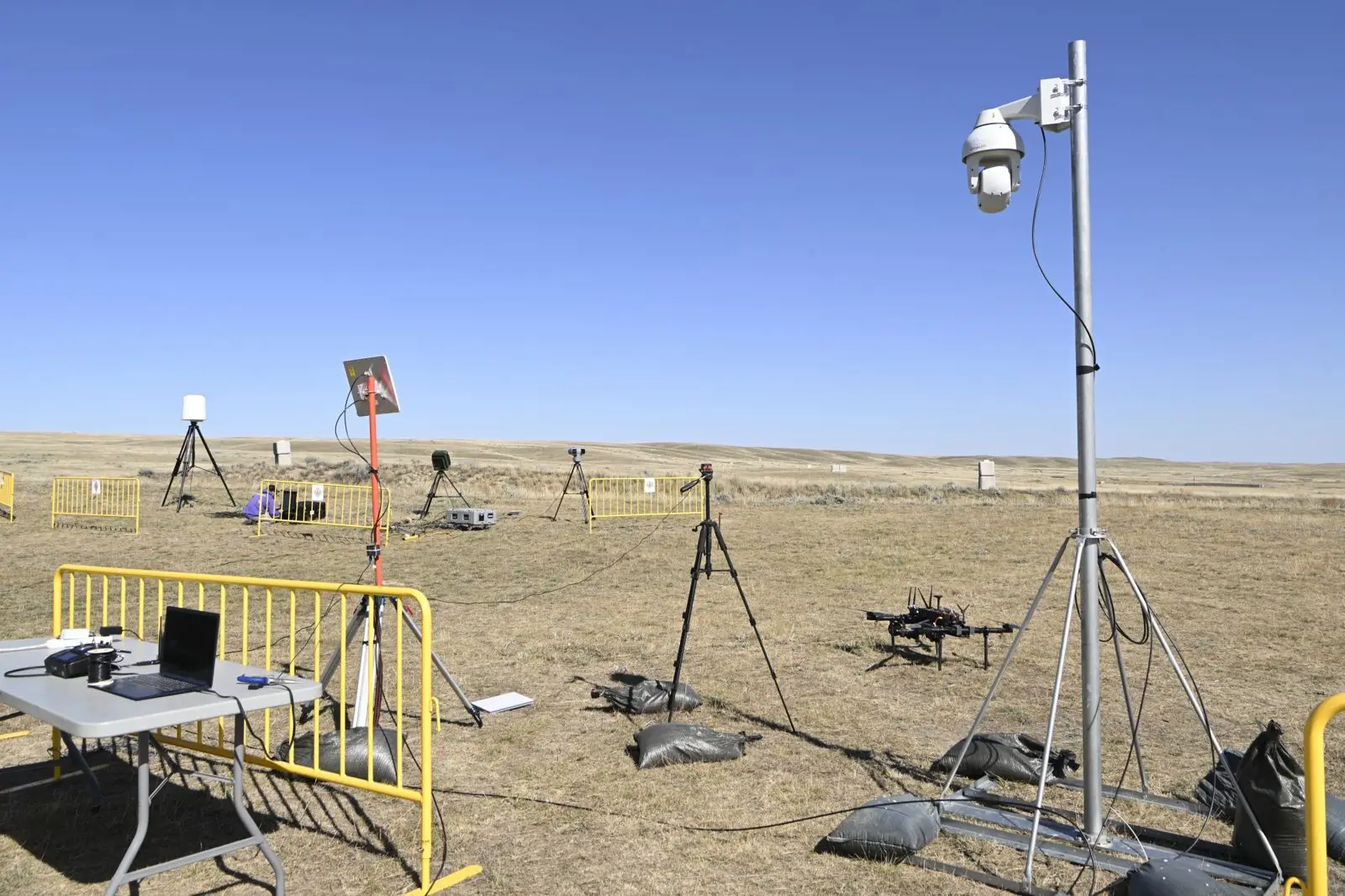
A radar or other sensor spots the drone and passes its position to AI-Scout.
- 02
Launch
AI-Scout lifts off from a vehicle or a team on foot and navigates itself toward the target at up to 100 km/h.
- 03
Lock on
Onboard cameras and AI find the target, classify it as a drone and not a bird or aircraft, track it and choose how to approach.
- 04
Capture
With the operator’s approval, AI-Scout fires a net and captures the drone at close range.
- 05
Recover
The target comes down under a parachute and is recovered whole. AI-Scout can take on a second drone in the same flight.
Illustrative animation, not to scale. Skip animation
Field footage
The same steps, filmed in the field.
Short clips from AI-Scout flight testing, without audio.
In the field
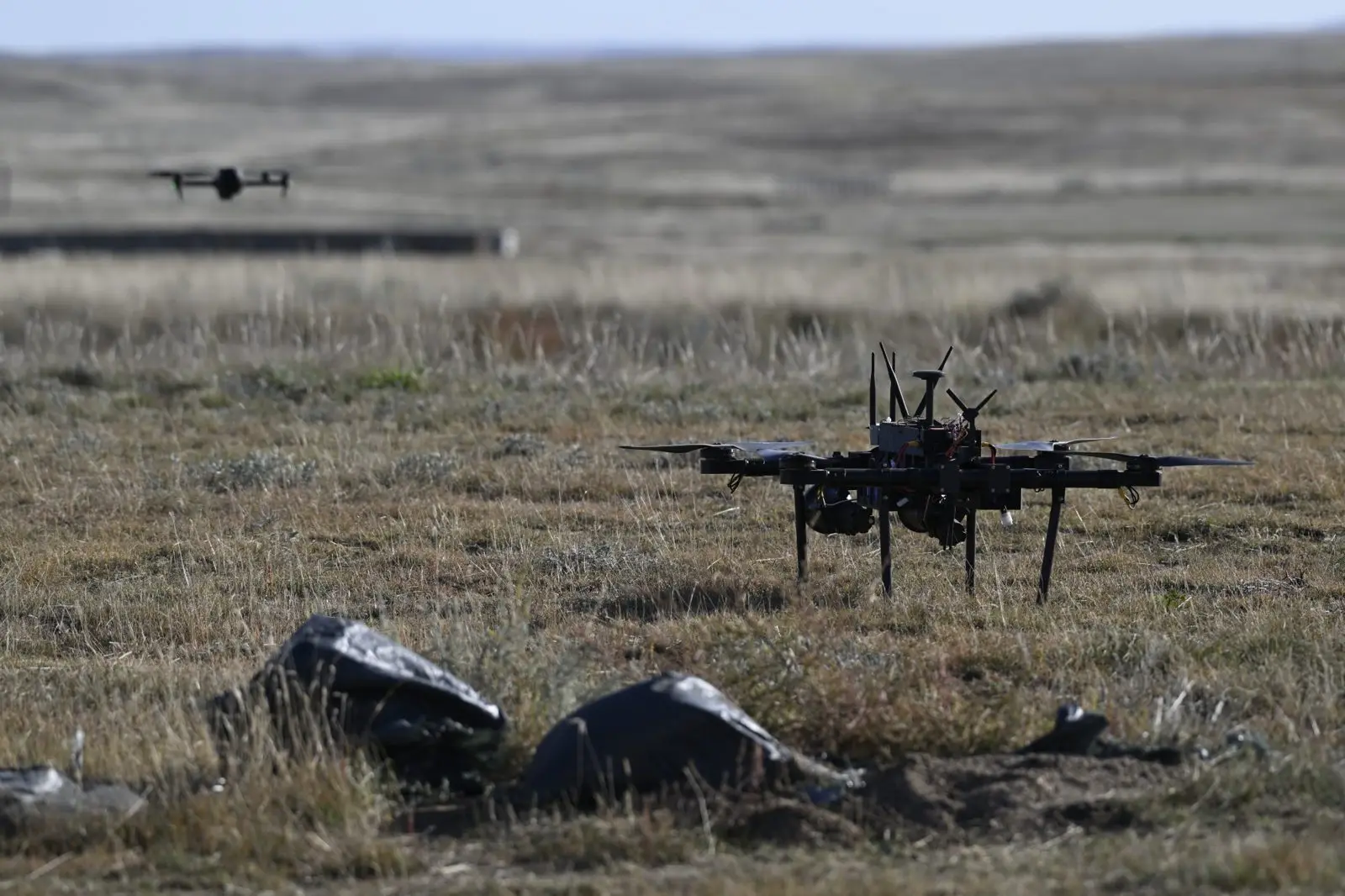
Launches from a vehicle or a team on foot.
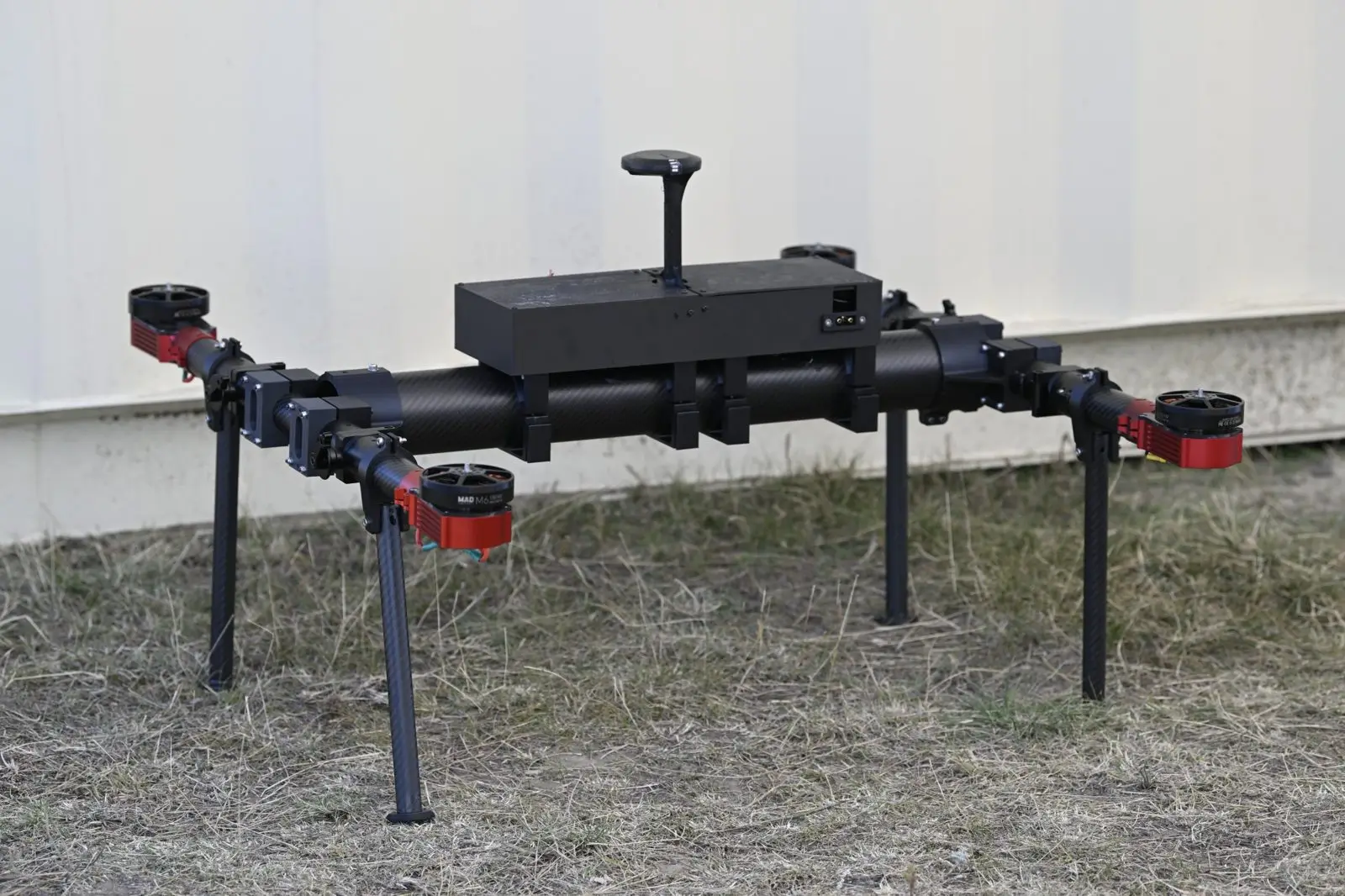
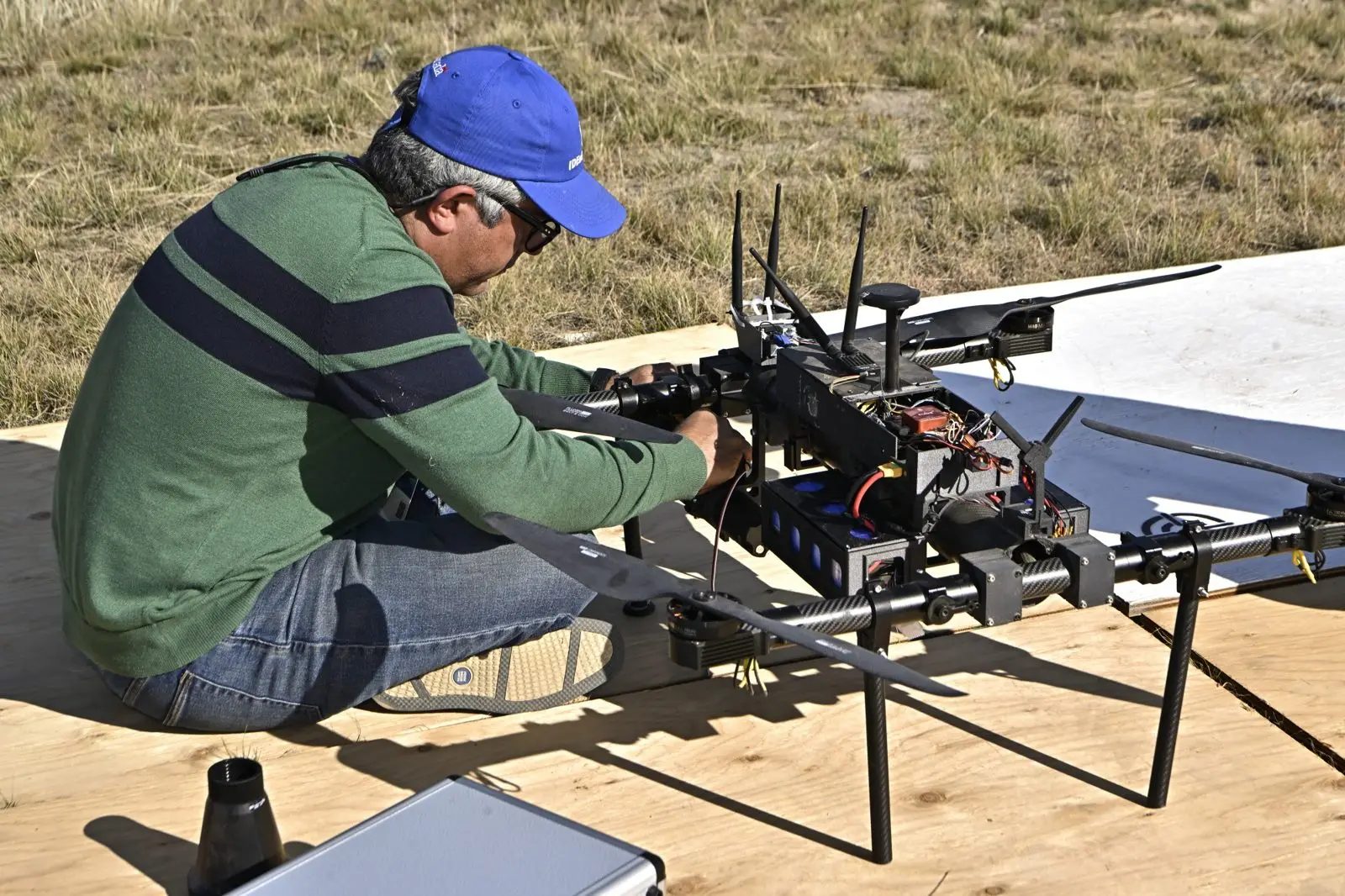
A folding frame and no fixed installation mean AI-Scout goes where it is needed, and connects to the radar and detection systems a site already has.
Why AI-Scout
Built for the real world.
Decides in flight
AI on the aircraft navigates, finds and classifies the target, tracks it and chooses how to approach, telling drones apart from birds.
A person approves
An operator approves every capture from a touchscreen ground station.
Safe capture
No bullets, no fragments, no jamming. The target comes down whole and under control, and AI-Scout can handle two in one flight.
Sensitive sites
Built for places like oil refineries, stadiums and critical infrastructure, where debris or jamming is not acceptable.
Goes where you go
A folding frame carried by vehicle or by a team on foot, connecting to the radar and detection systems a site already has.
First response
FirstScout, a version for fire and police services, brings AI-Scout to first responders.
Specifications
AI-Scout at a glance
| Type | Electric quadcopter, H-frame |
|---|---|
| Role | Autonomous decision-making and capture |
| Where | Sensitive sites such as oil refineries and stadiums; first response (FirstScout) |
| Capture method | Physical capture, parachute recovery |
| Captures per flight | Up to 2 |
| Top speed | 100 km/h |
| Day and night | Yes, colour and thermal cameras |
| Transport | Folding arms, vehicle or backpack |
| Made in | Port Coquitlam, BC, Canada |
Achievements
Tested in the field.
- 2025
AI-Scout program launched
Drawing on that field experience, Skyscouter launches AI-Scout, an autonomous aerial robot that captures drones in flight.
- Program
ISC Attritable Interceptors
Selected in the Innovative Solutions Canada Attritable Interceptors challenge.
- March 2026
NRC IRAP support
The National Research Council of Canada’s IRAP supports work on AI-enabled drone detection, combining radar and optical sensing.
- Summer 2026
Flight-test campaign
The AI-Scout airframe, sensors and onboard AI come together in an intensive flight-test campaign.
- August 2026
First capture in flight
AI-Scout captures a target drone in flight for the first time.
- November 2026
DARIT Technologies collaboration
Skyscouter and DARIT Technologies integrate their systems, with the first end-to-end integration running.
- Next
Production and FirstScout
Production units, and FirstScout, a first-responder version of AI-Scout for fire and police services.
Programs: ISC Attritable Interceptors challenge · NRC Industrial Research Assistance Program (IRAP)
AI-Scout questions
What is AI-Scout?
AI-Scout is a reusable autonomous aerial robot designed and built in British Columbia, Canada. It makes its own decisions in flight: it navigates, finds and classifies the target, tracks it and chooses how to approach. It captures unwanted aerial objects over sensitive locations and brings them down whole, where shooting, jamming or crashing into a drone is not an option. An operator approves every capture.
Where is AI-Scout used?
Over sensitive locations where an unwanted aerial object has to be stopped without debris or jamming, such as oil refineries, stadiums, airports and critical infrastructure. FirstScout, a version for fire and police services, brings AI-Scout to first responders.
How does AI-Scout capture a drone?
AI-Scout flies to the drone and captures it physically in the air. The captured drone descends under a parachute into a small, predictable area and is recovered intact, so its owner and what it carried can be identified.
Why capture a drone instead of jamming or shooting it?
Jamming radio signals does not stop a drone that flies autonomously, and destroying a target sends debris onto whatever is below. Capture uses no bullets, fragments or jamming, and the target comes down whole and under control.
Does a person stay in control of AI-Scout?
Yes. AI-Scout makes its own decisions in flight, from navigation to finding, classifying and tracking the target, but an operator approves every capture from a touchscreen ground station.
Does AI-Scout need its own radar?
No. AI-Scout connects to the radar and detection systems a site already has. A radar or other sensor spots the drone and passes its position to AI-Scout, then onboard cameras and AI take over.
How many drones can AI-Scout capture in one flight?
Up to two. AI-Scout returns after each mission and flies again.
How is AI-Scout transported?
AI-Scout has folding arms and is carried by vehicle or by a team on foot in a backpack, with no fixed installation needed.
Has AI-Scout been tested?
Yes. After an intensive flight-test campaign in the summer of 2026, AI-Scout first captured a target drone in flight in August 2026.
Talk to us about AI-Scout
Technical detail and performance data are available on request.